
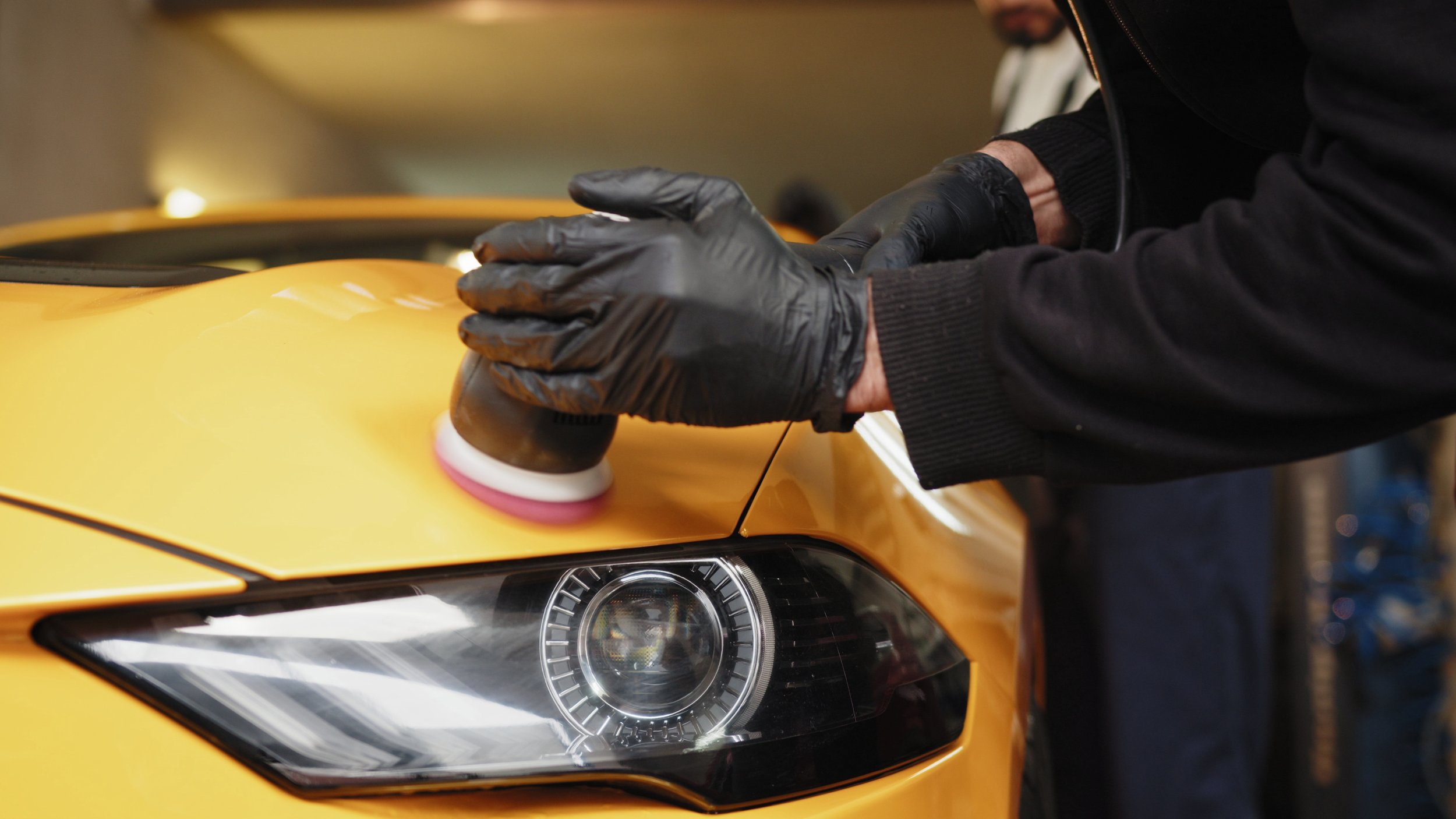
Paint Correction Services
Restore clarity, depth, and reflection—then protect it properly.
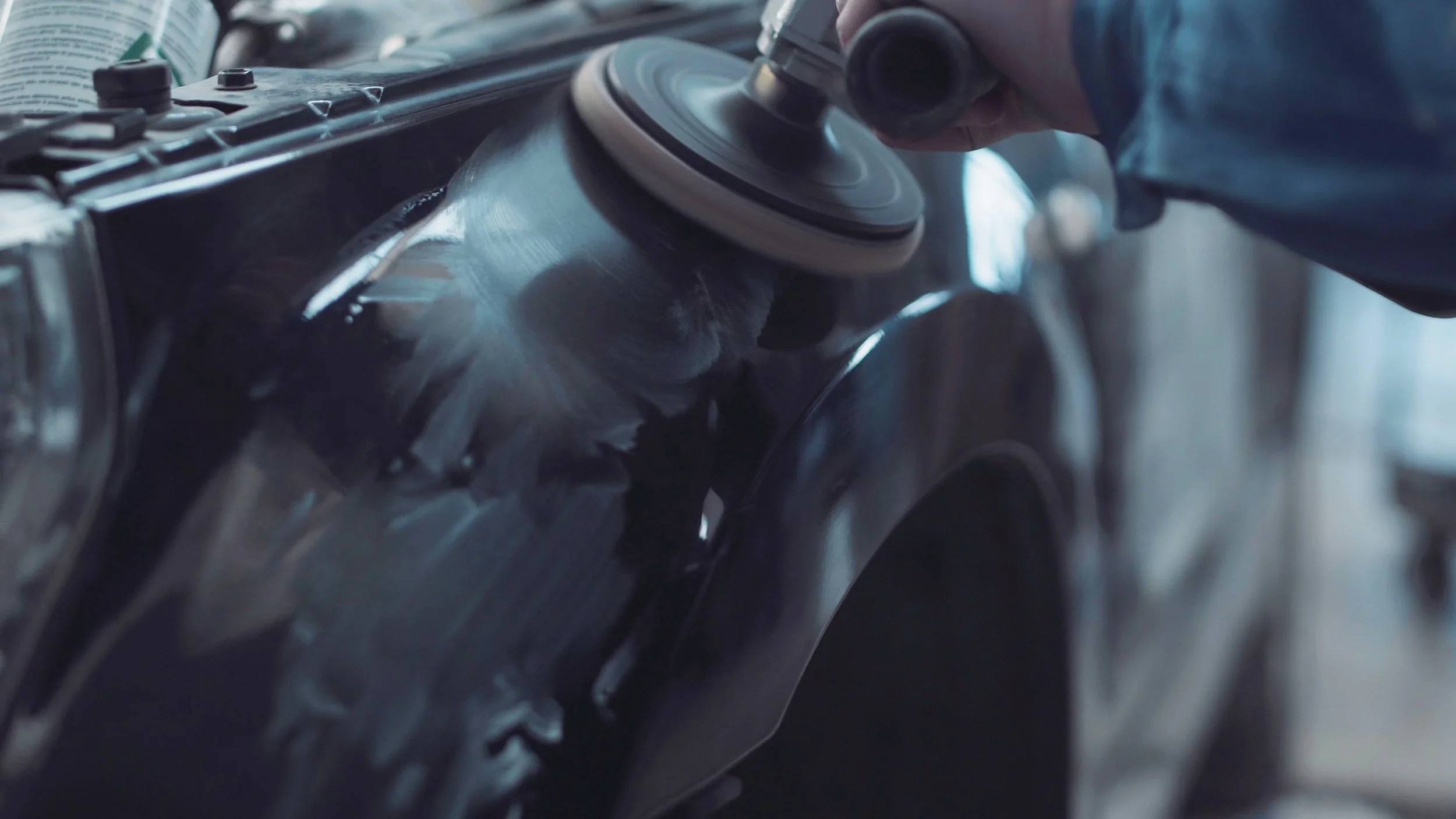
Paint correction is the difference between a car that’s clean and a finish that looks refined. We carefully polish the clear coat to reduce swirls, haze, oxidation, and light defects—bringing back gloss and sharp reflections. And because correction reveals your best finish, we strongly recommend pairing it with ceramic coating to lock in the results and make maintenance dramatically easier
What paint correction fixes
Swirl marks and micro-marring (the “spiderweb” look under lights)
Haze that dulls reflection and metallic flake
Light scratches and wash-induced marks
Oxidation / chalky appearance on neglected paint
Water spot etching (where safe to improve)
Overall clarity, gloss, and depth
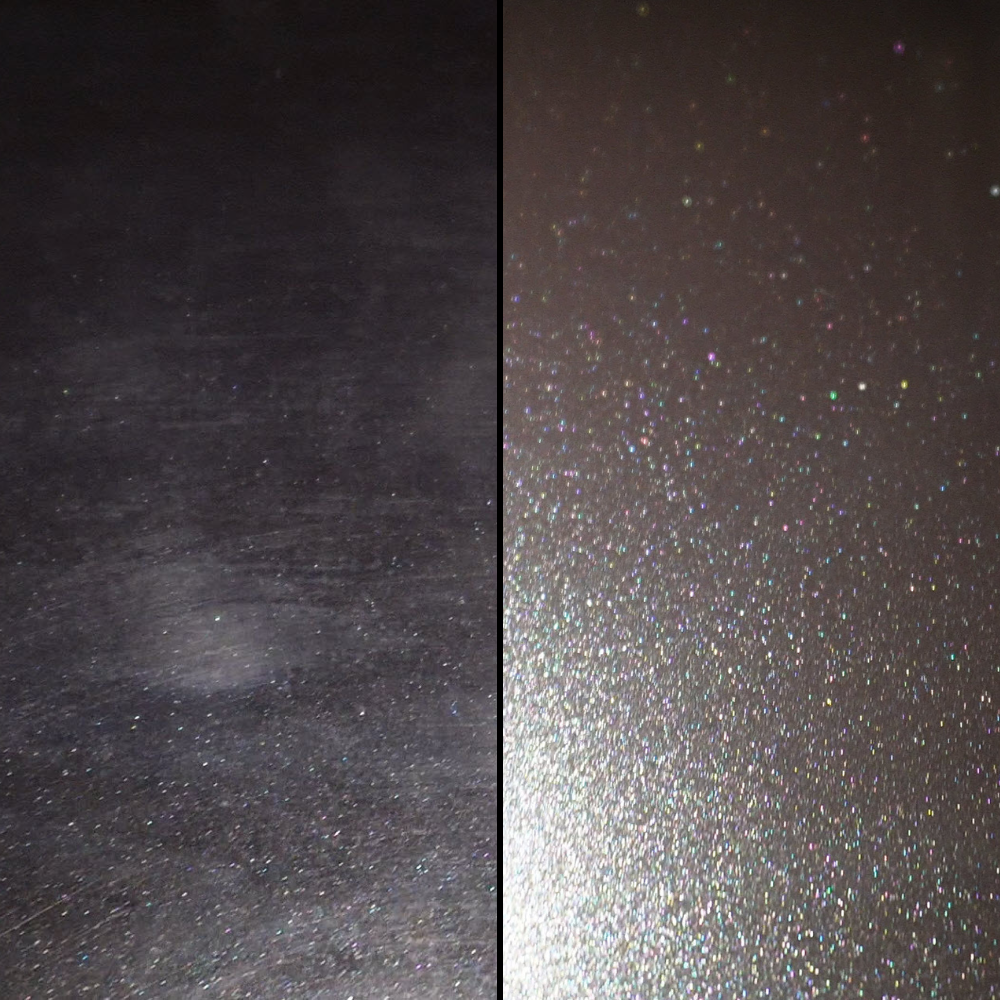
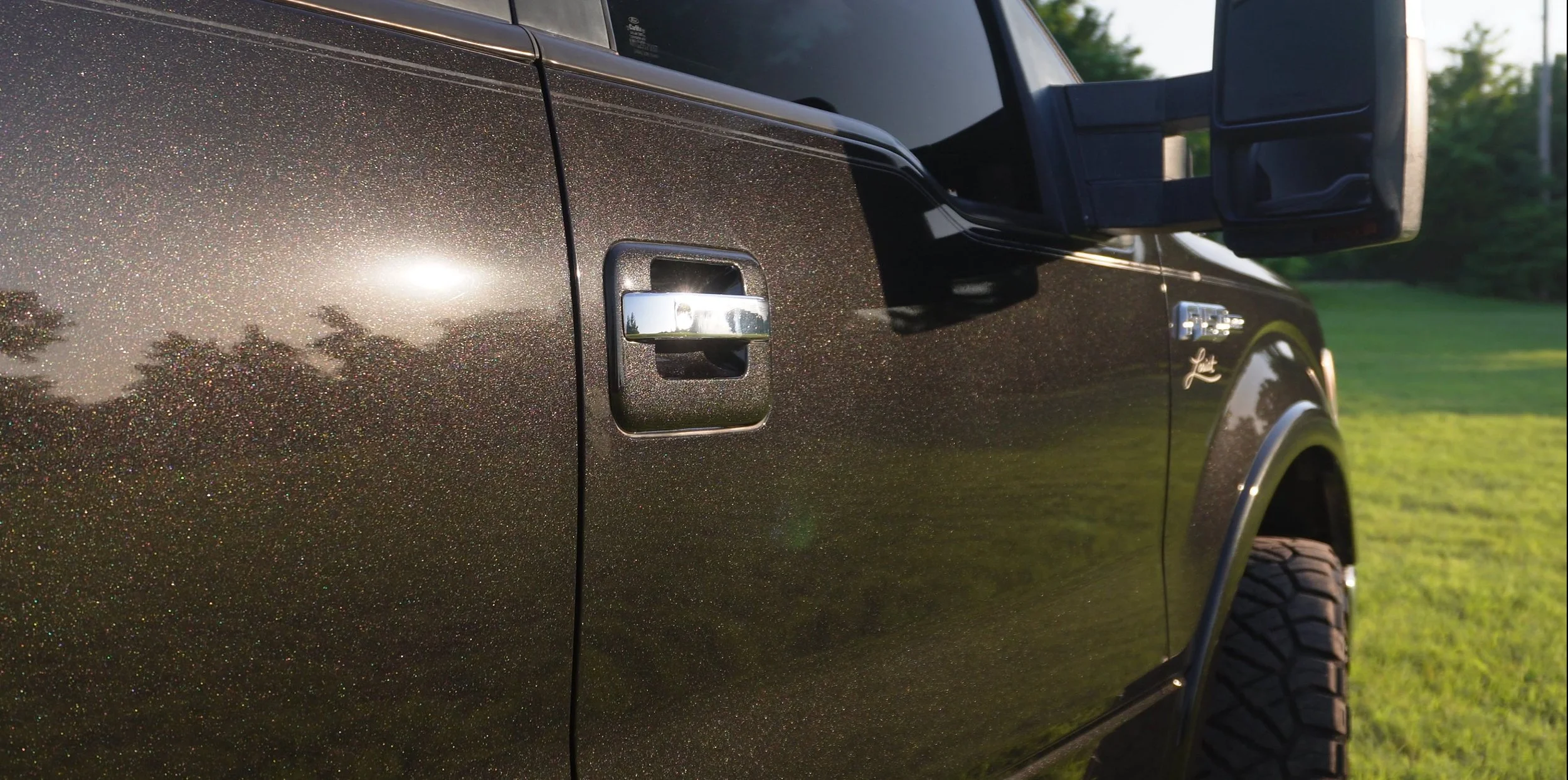
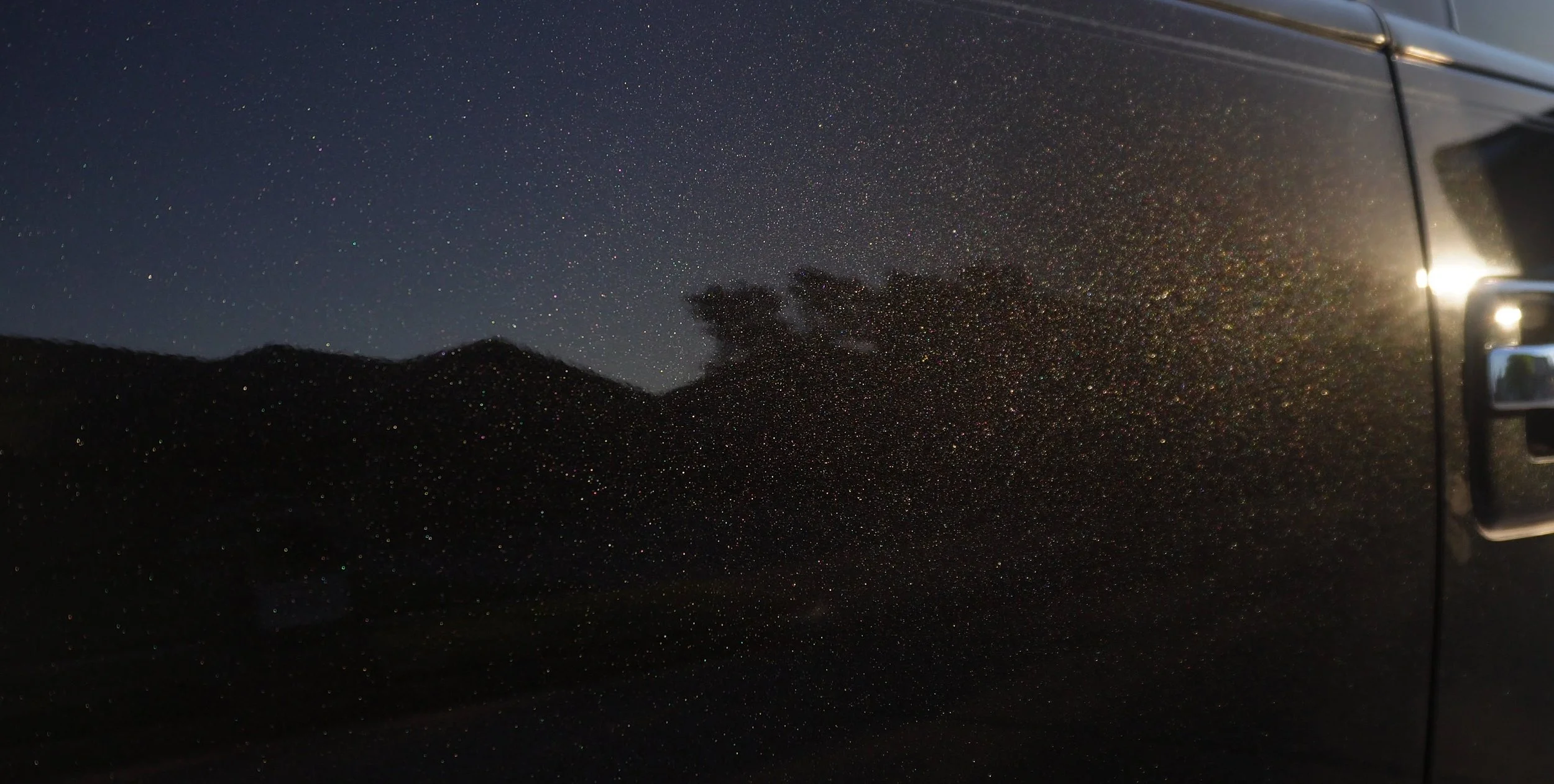
The image shows how massive of a difference good paint correction makes. On the left side you can see some light scratches, haziness, and dullness.
The right clearly shows off all of the diversity in the paint and brings the vehicle back to life. Both of these photos are from the same F150
What paint correction is
(and what it isn’t)
What it is:
Paint correction is a controlled polishing process that levels tiny imperfections in the clear coat to improve gloss, clarity, and reflections. It’s how you get that clean, “liquid” look—especially on darker colors.
What it isn’t
Paint correction won’t prevent future scratches or haziness, and it can’t safely remove every deep scratch if it’s through the clear coat. Clear coat is a thin protective layer—typically on the order of ~35–50 microns (about 1.5–2.0 mils)—so professional correction is always measured and conservative
Paint Correction is the reset. Ceramic Coating is the protection plan that keeps it looking that way.
Interested in protecting your paint? Click the button below to learn more about ceramic coating.
A better finish for daily driving
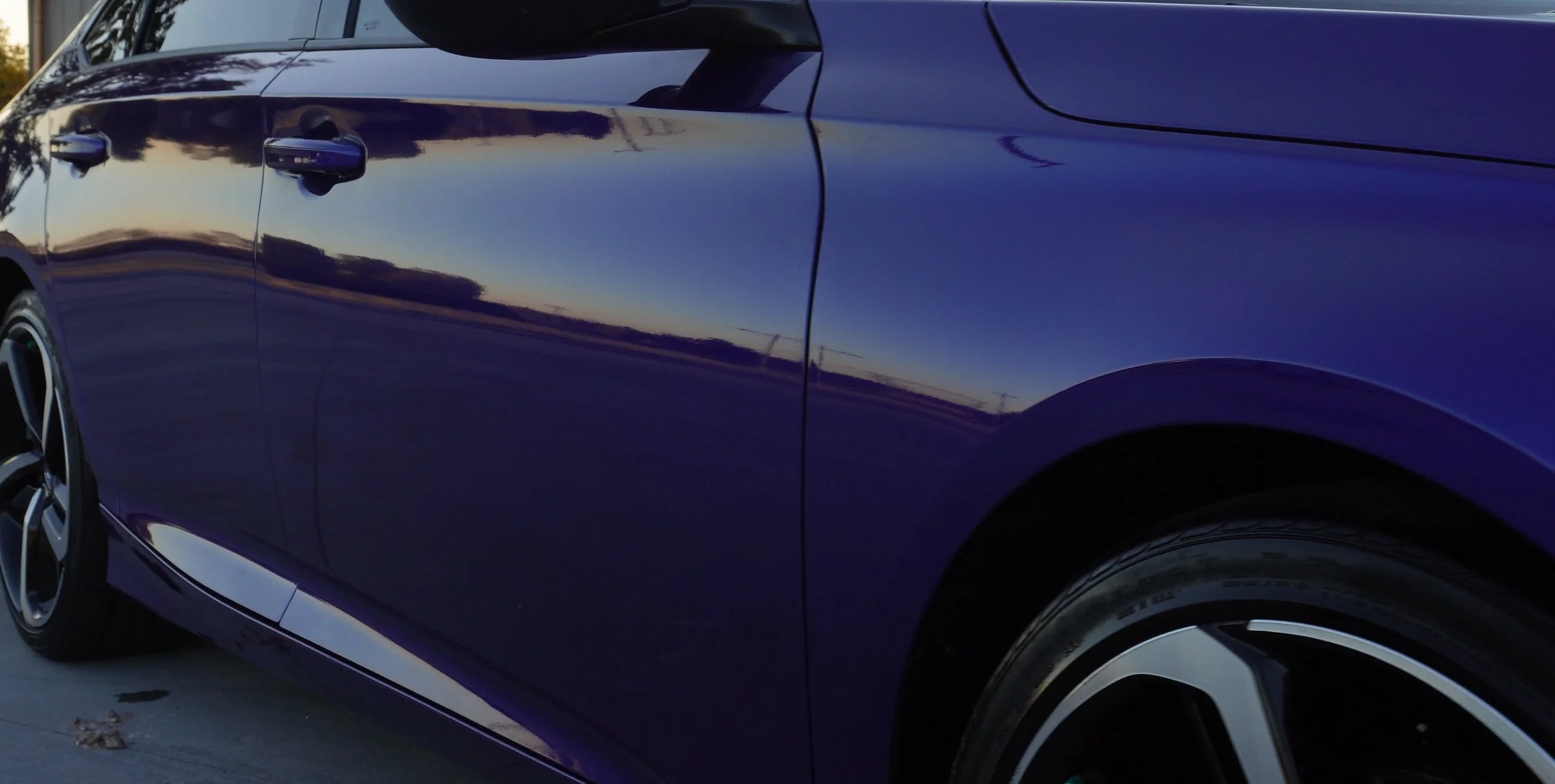
Street parking, sun, dust, highway driving—real life adds up. If your paint looks great right after a wash but dulls quickly under direct light, paint correction restores the clarity you’ve been missing. Then, pairing it with ceramic coating helps your vehicle stay cleaner longer and makes safe maintenance easier.
We treat paint like a finish—not a surface to rush. Every vehicle gets a plan based on condition, lighting inspection, and your goals
Our paint correction process
-
We identify swirls, haze, oxidation, and deeper defects.
-
Removes film and contamination before polishing.
-
We dial in pad, polish, and technique before committing to the full vehicle.
-
One-step enhancement or multi-step correction depending on severity.
-
Ensures clarity and removes residue for a true finish.
-
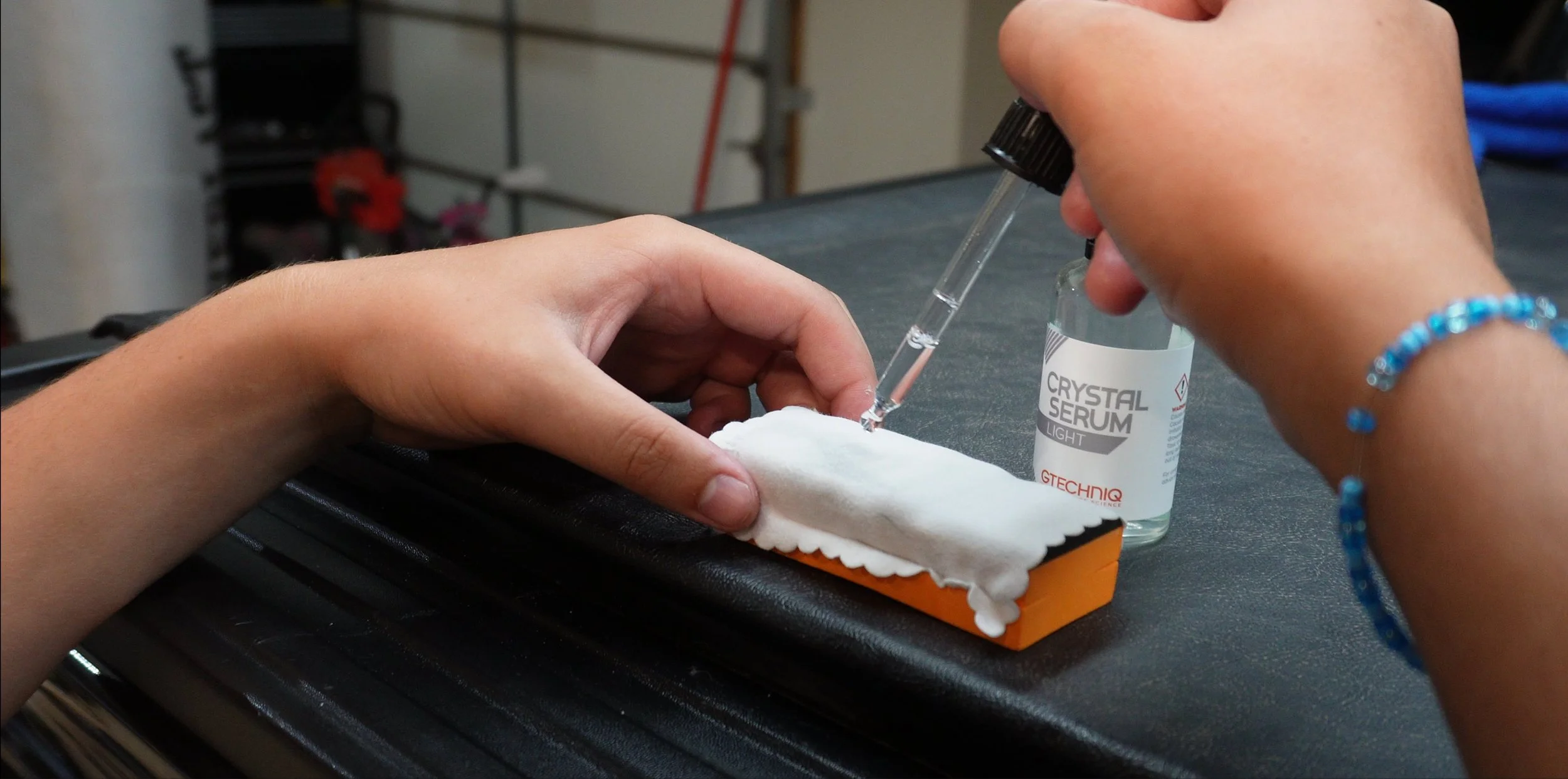
Once corrected, we recommend ceramic coating to preserve the finish you paid for.
Most clients choose Correction + Ceramic Coating to preserve the finish you paid for.
Correction Options
(based on paint condition)
-
![]()
One-Step Paint Enhancement
Ideal for vehicles with light swirls and mild haze. Improves gloss and clarity with an efficient approach. -
![]()
Two-Step Paint Correction
(Most Common)
For vehicles with visible swirls, haze, or light defects—perfect when you want the “refined” look. -
![]()
Correction + Ceramic Coating
(Best Long-Term Value)
Paint correction restores the finish. Ceramic coating keeps it that way, improves wash behavior, and helps protect against daily grime and chemical staining.
How to keep corrected paint looking refined
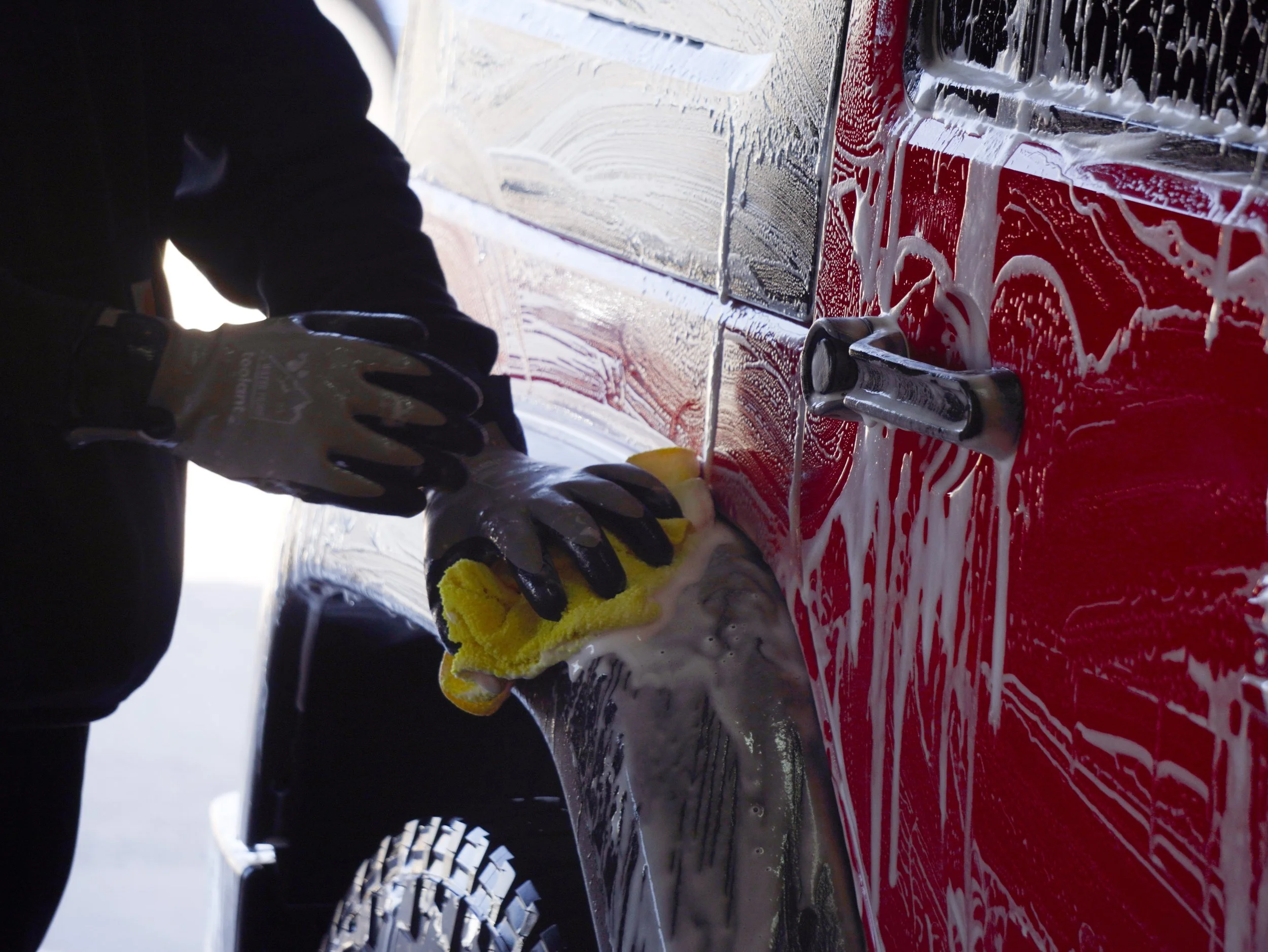
Wash with safe methods and proper drying
Avoid harsh brushes and automated washes that reintroduce swirls
Remove bug splatter and bird droppings promptly
Consider ceramic coating for easier maintenance and longer-lasting results
Schedule maintenance details to keep the finish performing
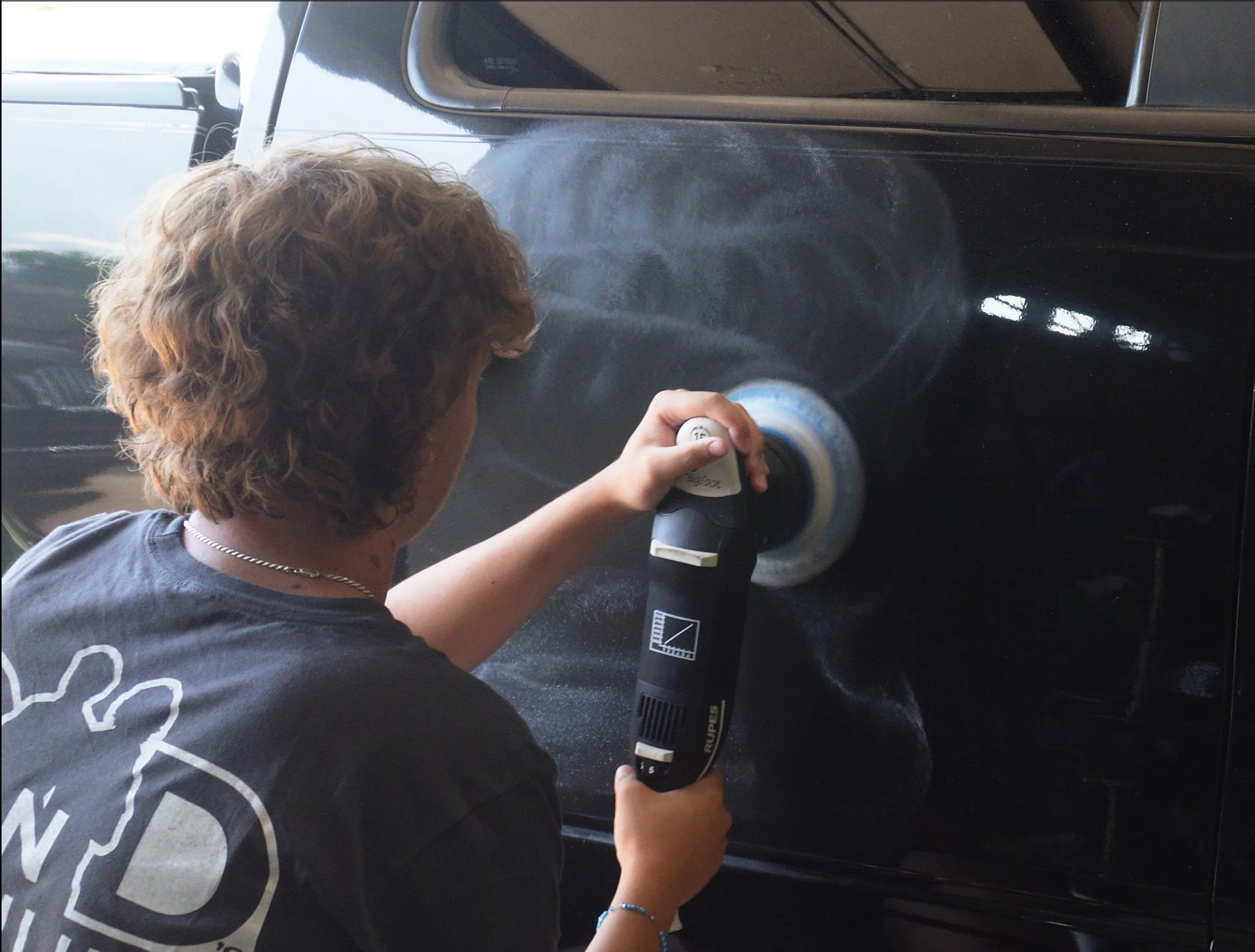
Correction is most visible under direct light—where swirls and haze normally jump out
Before & after: what correction changes
Learn More
Watch the video above to see the behind the scenes of how paint correction actually works. You can also watch us install a ceramic coating to protect the paint correction.
Paint Correction FAQs
-
With proper washing habits, paint correction shouldn’t be needed frequently—often only every few years.
A ceramic coating will also reduce the need for frequent paint correction. -
If you have visible swirls or haze, correction is the best way to ensure the coating “locks in” a finish you’re proud of—because coatings don’t hide defects, they can make them more noticeable. (That’s why “Correction + Coating” is our most recommended route.)
-
It depends on your paint condition and goals. One-step improves gloss and removes lighter defects; two-step targets heavier swirling and refines the finish further.
-
Not always. If a scratch is too deep (through the clear), fully removing it may require removing too much clear coat. Professional correction prioritizes safe improvement.
-
Most corrections take several hours to a full day depending on size and condition. We’ll quote based on what your vehicle needs.
-
Protect it. Ceramic coating is the best next step for keeping the finish looking corrected longer—and making washing easier.
Still have questions? Give us a call.